“What did we actually do this month?”
See the agreements reviewed, agreements drafted, legal opinions, credit analysis, letters and other work the team completed.

Loading…
Keep the Contracts & Transactions team’s work in one place as it happens, so when management wants to know what the unit has done, nobody has to start pulling the answer together from spreadsheets and work schedules.
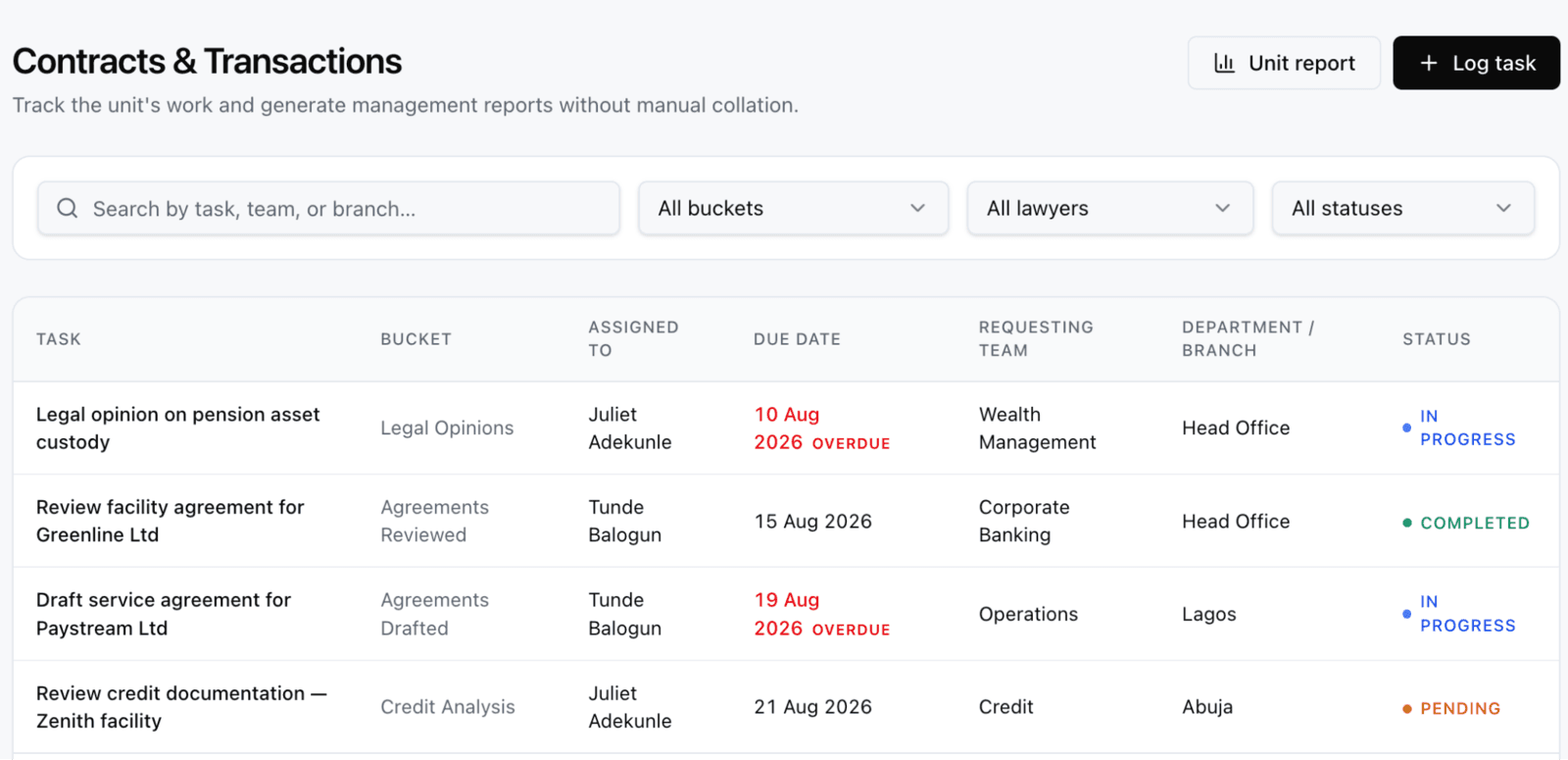
See the agreements reviewed, agreements drafted, legal opinions, credit analysis, letters and other work the team completed.
See the work assigned across the team, what’s complete and what’s still sitting with someone.
See the volume coming through the unit instead of relying on somebody to manually count the schedule.
See which business teams are sending work to Contracts & Transactions and what they’re asking for.
See the work handled by each member of the team without asking everyone to prepare their own numbers.
No lawyer has to go back to the work schedule. Pull together what everybody did. Separate the agreements from the legal opinions, credit analysis, letters, meetings, and everything else. Count it. Collate it, and then turn it into something management can use.
And next month, do it again.
Use the work already recorded in ContractOps to produce the management view without another round of collation.
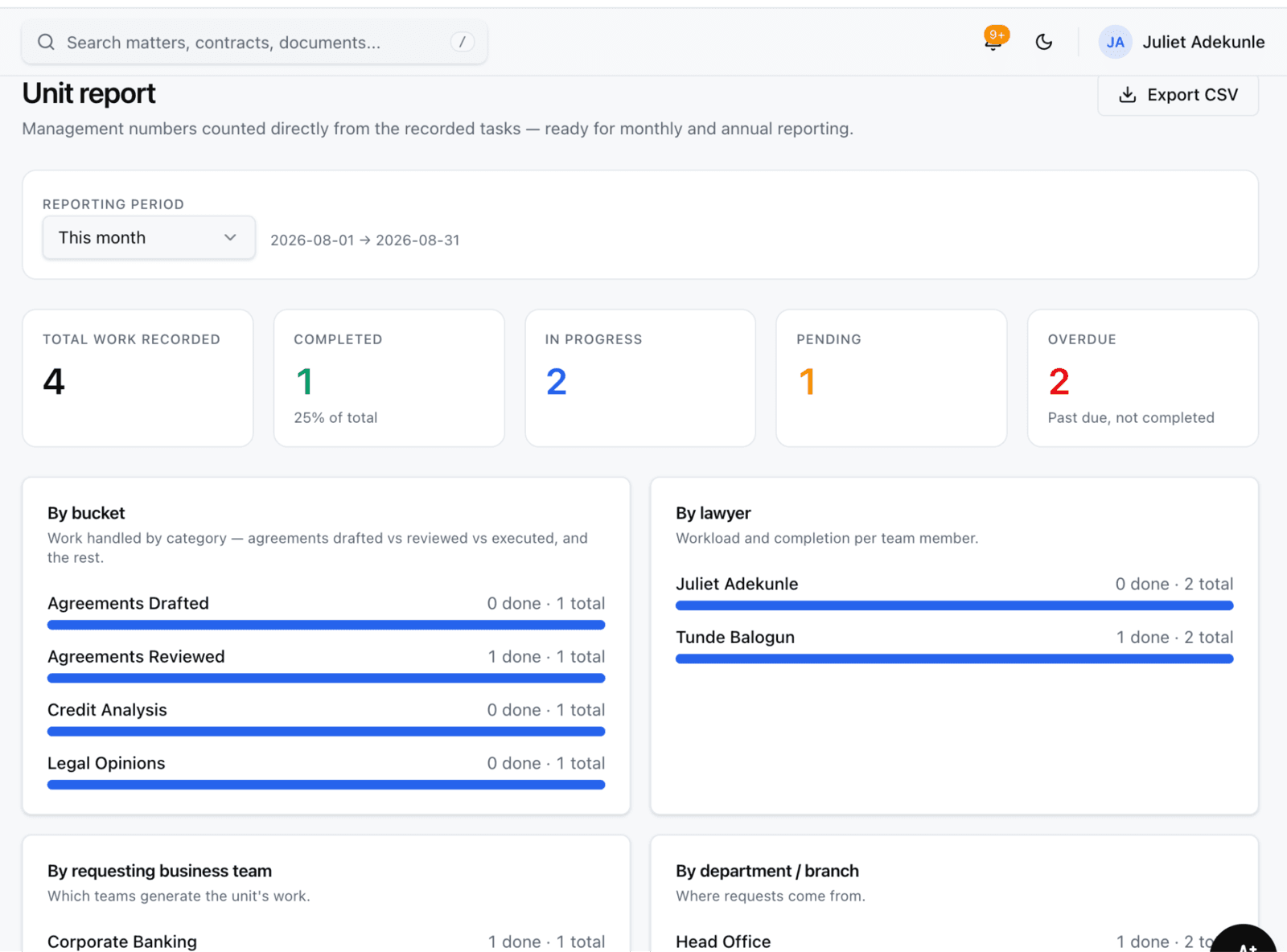
ContractOps gives the unit one place to capture its work as it happens.
Agreements are only part of the workload. There are legal opinions. Credit analysis. Letters. Meetings. And the other work the unit handles for the business.
ContractOps captures the unit’s work, not just the contracts passing through it.
Twelve months of agreements, opinions, analysis, letters, and other work shouldn’t mean twelve months of schedules somebody now has to pull apart and put back together.
ContractOps keeps the team’s work and its management picture together — so reporting becomes an output of the work, not another piece of work.